
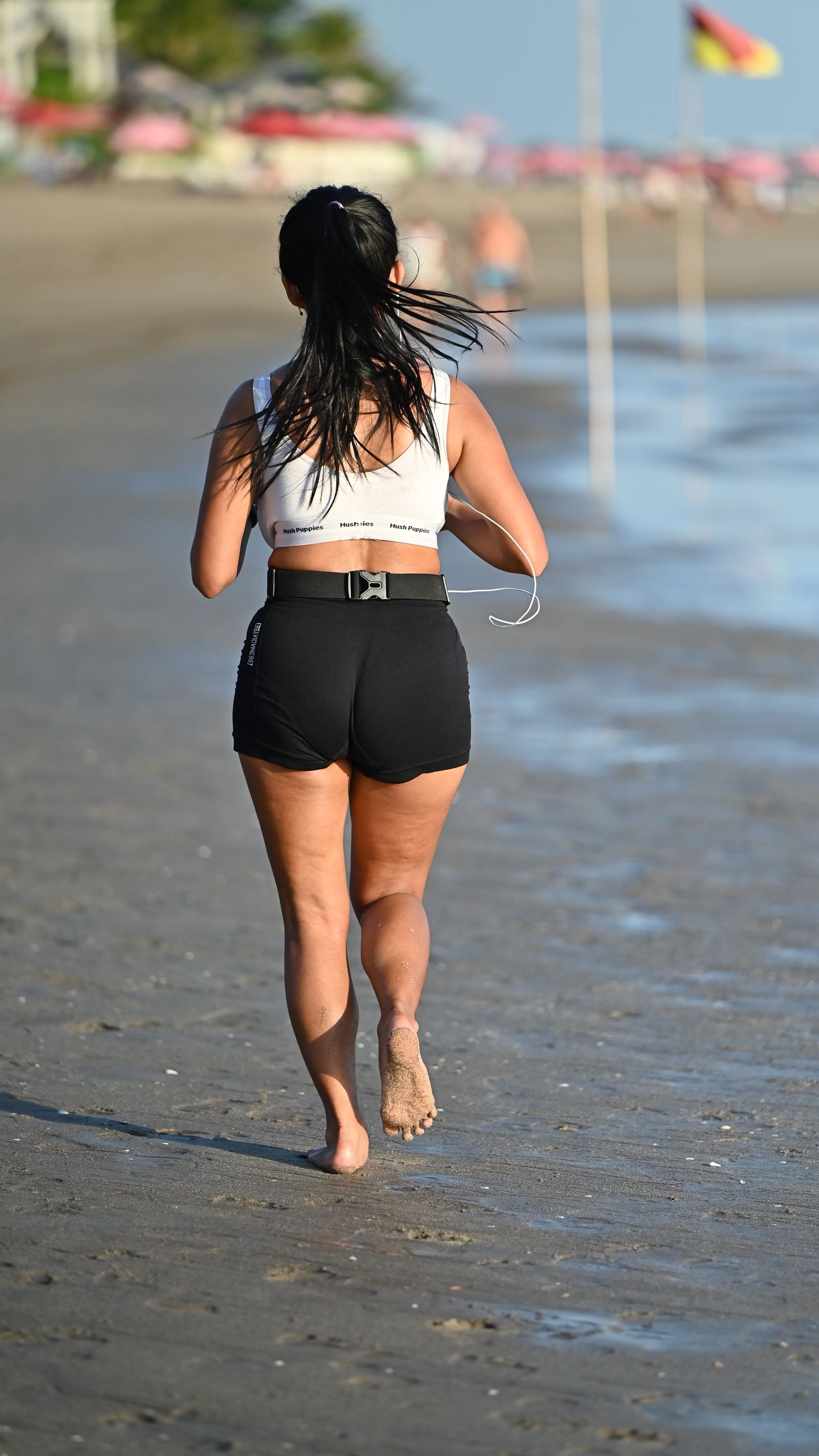
Barefoot Running Had 15 Years to Prove Itself. Here's the Verdict.
Barefoot running had 15 years to prove itself. The verdict: no injury shield, no speed boost, but a few real uses. Here's what the research says.

Telchatta Kumar
Barefoot Running Had 15 Years to Prove Itself. Here's the Verdict.
Listen to this article · English
After roughly 15 years of research, the verdict on barefoot and minimalist running is clear: on average, they neither prevent injuries nor make you faster. What they do is shift stress away from the knees and onto the feet, calves and Achilles tendons. Barefoot running is a tool, not a cure: it moves load around your body rather than removing it, so it helps some runners and hurts others.
Key takeaways
- The largest review to date, a 2022 Cochrane analysis of 12 trials, found no shoe type, minimalist or cushioned, that clearly prevents running injuries.
- Rapid switches to minimalist shoes are linked to foot bone stress and more calf and shin pain.
- Running barefoot is not more economical than running in lightweight cushioned shoes.
- Minimalist footwear and barefoot drills can strengthen the small muscles of the foot.
- If you try it, go slowly: think months, not weeks, and start with minutes, not miles.
How the barefoot boom started
The movement took off around 2009. Christopher McDougall's book Born to Run became a bestseller, and in 2010 a Nature paper led by Harvard's Daniel Lieberman showed that habitually barefoot runners often landed on the forefoot with a smaller impact spike than heel-striking runners in shoes.
Put those together with the evolutionary case that humans are built for distance (we covered that in Humans Really Were Born to Run) and the conclusion seemed obvious: modern cushioned shoes were the problem. Sales of toe shoes and minimalist trainers surged, and running forums filled with promises of injury-free miles.
The trouble is that the science was narrower than the story. Lieberman's team measured impact forces, not injury rates, and said so. The next decade of research set out to test the bigger claims.
What 15 years of research actually found
Foot strike and impact
Landing on the forefoot does reduce the sharp initial impact peak seen in heel strikers. But it does not reduce total load; it relocates it. A 2013 study by Juha-Pekka Kulmala and colleagues in Finland found that forefoot strikers had lower knee loading but higher ankle loading than rearfoot strikers.
That trade-off matters. If you have cranky knees, shifting some load to the ankle may help. If you have a touchy Achilles or tight calves, it may make things worse.
Even the idea that barefoot humans "naturally" run on their forefoot turned out to be shaky. A 2013 study by Kevin Hatala and colleagues of the Daasanach people in northern Kenya, who grow up mostly barefoot, found they landed heel-first in 72% of trials at comfortable speeds. Speed, surface and habit all shape foot strike. Small changes in step rate can also lower impact, as we explained in Cadence Cults Are Wrong.
Injuries
This is where the barefoot promise fell hardest:
- Bone stress. A 2013 MRI study led by Sarah Ridge found that 10 of 19 experienced runners who transitioned to Vibram FiveFingers over 10 weeks developed new bone marrow edema in the foot, an early sign of bone stress. Two developed stress fractures.
- Pain and injury in trials. A 2014 randomized trial by Michael Ryan and colleagues in the British Journal of Sports Medicine gave 99 runners neutral, partial minimalist or full minimalist shoes for a 10K build-up. The full minimalist group reported more shin and calf pain, and the partial minimalist group had the most injuries.
- Body mass and mileage matter. A 2017 randomized trial by Joel Fuller and colleagues followed 61 runners for 26 weeks. Pain increased with minimalist shoes once weekly distance passed about 35 km (22 miles), and injury risk rose for heavier runners: at 85.7 kg (189 lb), the risk roughly doubled compared with conventional shoes.
- The big picture. A 2022 Cochrane review by Nicola Relph and colleagues pooled 12 trials with 11,240 participants. Its conclusion: there is no clear evidence that any category of running shoe prevents lower-limb injuries, and the certainty of most evidence is low.
So cushioned shoes are not proven protectors either. The honest answer is that footwear is a modest factor next to training load, sleep, strength and how quickly you change things.
Speed and economy
Lighter is faster, up to a point. Studies consistently find that adding mass to the feet raises the energy cost of running by about 1% per 100 g (3.5 oz) per shoe. But in a 2012 study, Jason Franz, Corbyn Wierzbinski and Rodger Kram at the University of Colorado found that running barefoot offered no metabolic advantage over lightweight cushioned shoes of about 150 g. When mass was matched, shod running was 3-4% more economical. Cushioning appears to save muscles some work.
Where barefoot training does help
The verdict is not "never go barefoot." It is "use it for what it actually does well."
- Stronger feet. A 2016 study by Tony Chen, Irene Davis and colleagues in Hong Kong found that 6 months of gradual running in minimalist shoes increased the size of several foot muscles. A 2019 study led by Sarah Ridge found that simply walking in minimalist shoes for 8 weeks increased foot muscle size and strength.
- Variety of load. Short doses of barefoot or minimalist running spread stress across different tissues, which may help runners who keep overloading the same spot.
- Feedback. Barefoot strides on grass make overstriding uncomfortable, which can help you feel a lighter, quicker step.
- Lighter runners at modest volume. In Fuller's trial, the extra injury risk of minimalist shoes only appeared above about 71 kg (157 lb), and pain rose mainly beyond 35 km (22 miles) a week, so lighter, lower-mileage runners have the most room to experiment.
For most people, the sweet spot is using barefoot work as a supplement, a few minutes of drills and strides, not as their main training shoe. Pair it with a simple strength routine like our 15-minute strength session.
Who should be careful
Think twice, or skip minimalist running entirely, if you:
- Weigh more than about 85 kg (187 lb) or run more than 35 km (22 miles) a week.
- Have a history of metatarsal stress fractures, Achilles tendinopathy or calf strains.
- Have diabetes, peripheral neuropathy or reduced feeling in your feet; check with your doctor first.
- Are building towards a goal race in the next 8-12 weeks. That is no time for a footwear experiment.
See a physiotherapist or doctor if you develop pain on the top of the foot that hurts when pressed, swelling, or pain that worsens with each run. Those can be signs of a bone stress injury, and they need rest and assessment, not toughing out.
How to try barefoot running safely
If you want the foot-strength benefits, here is a conservative 12-week progression. Keep your normal shoes for the rest of your training.
- Weeks 1-2: walk barefoot at home daily; add 3 × 15 calf raises and 2 × 10 short-foot exercises (gently lifting the arch without curling the toes).
- Weeks 3-4: after an easy run, do 4 × 20-second barefoot strides on smooth grass or turf.
- Weeks 5-8: run 5 minutes barefoot or in minimalist shoes at the end of 2 easy runs per week, adding no more than 2-3 minutes per week.
- Weeks 9-12: build to 15-20 minutes in minimalist shoes, twice a week, at easy pace, for example 6:30/km (10:28/mile) or slower.
The rules: never increase two things at once, stop the progression if you feel calf or foot soreness the next morning, and drop back a stage for a week if pain appears. Expect the process to take 6 months or more if your goal is regular minimalist running.
Find a race to put your feet to the test
Whatever you wear, the best motivation is a start line. Browse upcoming races, pick a 5K as a low-stakes target, or search for a beach run where bare feet feel at home.
FAQ
Is barefoot running better for your knees?
It can reduce knee loading, because landing on the forefoot shifts some stress from the knee to the ankle and Achilles tendon. That trade-off may help runners with knee pain but can overload calves and feet. It has not been shown to reduce overall injury rates.
Does barefoot running prevent injuries?
No. A 2022 Cochrane review of 12 trials found no clear evidence that any type of footwear, including minimalist shoes, prevents running injuries. Rapid transitions to minimalist shoes have been linked to bone stress in the foot and more calf and shin pain.
How long does it take to transition to minimalist shoes?
Plan on at least several months, and often 6 months or more, to run regularly in minimalist shoes. Start with walking and a few minutes of running, increase by only 2-3 minutes per week, and back off at any sign of foot or calf pain.
Is it faster to run barefoot?
Not usually. Lighter footwear helps, about 1% less energy per 100 g removed from each foot, but research from the University of Colorado found barefoot running offered no metabolic advantage over lightweight cushioned shoes. When weight was matched, shoes were 3-4% more economical.
Should beginners run barefoot?
Most beginners are better off in a comfortable, conventional running shoe while their bones, tendons and muscles adapt to running. Short barefoot drills on grass, a few minutes after easy runs, are a low-risk way to build foot strength. Anyone with diabetes or reduced sensation in the feet should talk to a doctor first.