
Humans Really Were Born to Run. Instagram Got the Shoes Part Wrong.
Humans were born to run: sweat, springy tendons, big glutes. But the "ditch your shoes" hype got it wrong. Here's what evolution science really says.

Telchatta Kumar
Humans Really Were Born to Run. Instagram Got the Shoes Part Wrong.
Listen to this article · English
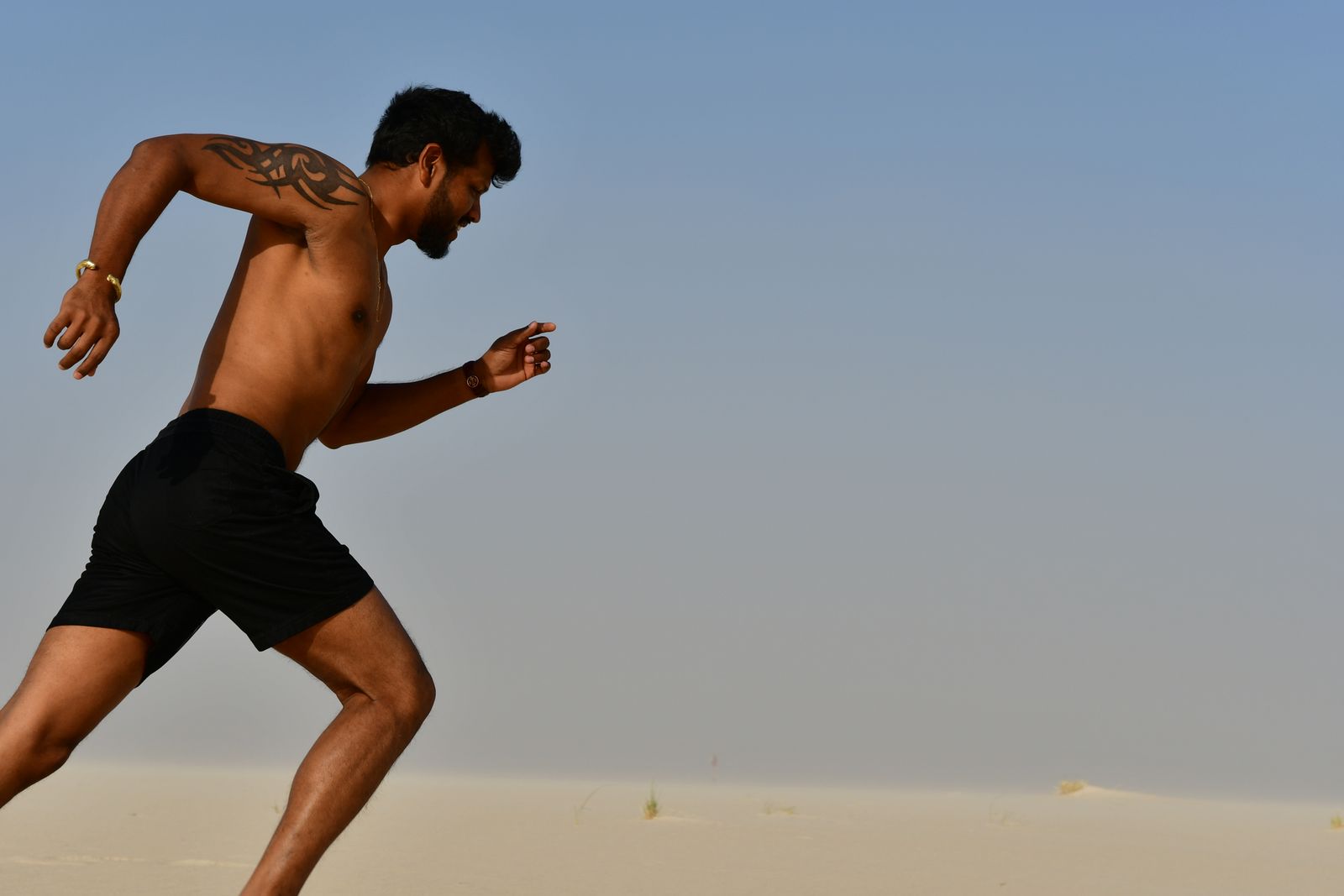
Yes, humans really were born to run. Our bodies carry a long list of features, from springy Achilles tendons to millions of sweat glands, that make sense mainly for running long distances in the heat. Evolution built you to run far, but it never handed down a rule about footwear, and the evidence that ditching your shoes prevents injuries is weak. The useful lesson is about how you train, not what you wear.
Key takeaways
- The "endurance running hypothesis" (Bramble and Lieberman, 2004) argues that running shaped the human body around 2 million years ago.
- Our real superpower is shedding heat by sweating, which lets humans keep moving in conditions that force most mammals to stop.
- Habitually barefoot people do not all run the same way; many land on their heels at easy speeds.
- No shoe type, minimalist or cushioned, has been shown to reliably prevent running injuries.
- What evolution does support: frequent easy running, gradual progression and strong "springs" in your calves and feet.
The science behind "born to run"
In 2004, biologist Dennis Bramble and anthropologist Daniel Lieberman published a landmark paper in Nature titled "Endurance running and the evolution of Homo." Their argument was simple and bold: walking alone does not explain the human body. Many of our features only pay off when we run.
The evidence they highlighted is written into your anatomy:
- Long, springy tendons. The Achilles tendon and the arch of the foot store and return elastic energy with every stride, like a pogo stick. Chimpanzees have a very short Achilles tendon.
- Big glutes. The gluteus maximus is relatively quiet when you walk on flat ground but fires hard when you run, stabilizing your trunk as you lean forward.
- A stabilized head. The nuchal ligament, a band at the back of the neck, helps keep the head steady while running. It is found in good runners like dogs and horses, but not in chimpanzees.
- Short toes and a narrow waist. Short toes reduce the work of running, and a waist that lets the shoulders counter-rotate against the hips helps balance each stride.
Fossils suggest many of these traits appeared with early Homo, around 2 million years ago. Not every anthropologist agrees running was the main driver; a 2007 critique by Travis Pickering and Henry Bunn argued it fit poorly with how early humans likely hunted. But the hypothesis remains one of the most influential ideas in human evolution.
Why heat is the human superpower
Humans are not fast. A good sprinter tops out around 10 m/s (about 22 mph) for a few seconds, while a horse or antelope can gallop much faster. Our edge is staying power, especially in the heat.
Most mammals cool down by panting, and many cannot pant effectively while galloping. Humans, by contrast, have millions of eccrine sweat glands and very little body hair, so we can dump heat while still moving. That opens the door to persistence hunting: tracking an animal at a steady pace through the midday heat until it overheats and collapses.
Anthropologist Louis Liebenberg documented modern persistence hunts in the Kalahari in a 2006 paper in Current Anthropology. Skeptics pointed out how rare such hunts were in 20th-century records. Then in 2024, Eugène Morin and Bruce Winterhalder published an analysis in Nature Human Behaviour of nearly 400 historical accounts of running hunts from 272 locations, concluding that the method could be as efficient as other pre-modern hunting techniques in the right conditions.
There is a fun modern echo. Since 1980, Wales has hosted the Man versus Horse race over roughly 22 miles (35 km) of hills. Horses won every year until 2004, when Huw Lobb became the first runner to beat them, on a hot day. Through 2026, humans had won just five times. We are not faster than horses; we are simply very good at lasting.
Where Instagram got the shoes part wrong
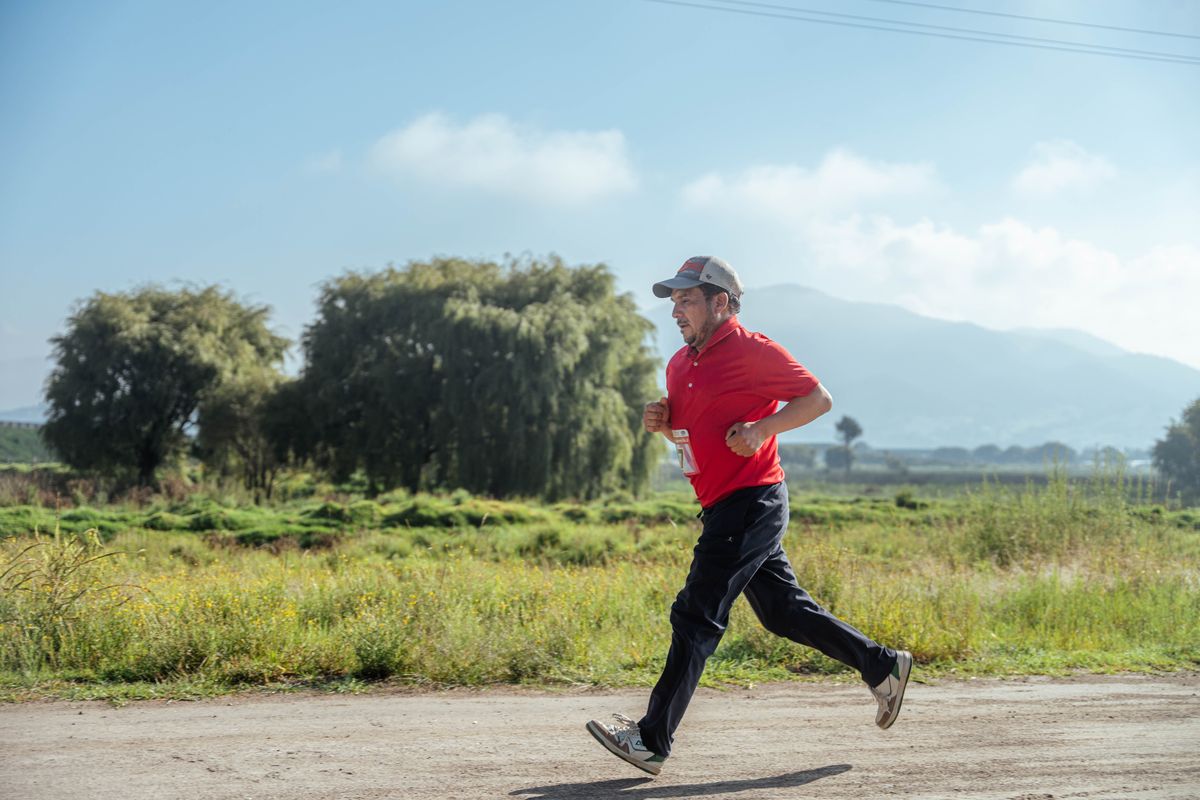
Around 2009 and 2010, the evolutionary story collided with a marketing boom. If our ancestors ran barefoot, the logic went, modern cushioned shoes must be the cause of our injuries. Toe shoes and "zero-drop" trainers flooded social feeds.
The science that fuelled this was real but narrower than the hype:
- What Lieberman found. A 2010 Nature study led by Lieberman showed that many habitually barefoot runners landed on the forefoot and produced a smaller impact spike than heel-striking shod runners. The authors stressed they had not tested whether barefoot running reduces injuries.
- Not all barefoot people run the same way. In 2013, Kevin Hatala and colleagues studied the Daasanach of northern Kenya, who grow up mostly barefoot. At their comfortable endurance speeds, they landed heel-first in 72% of trials and on the forefoot in only 4%.
- Fast transitions hurt. A 2013 MRI study by Sarah Ridge and colleagues found that 10 of 19 runners who switched to minimalist shoes over 10 weeks showed new bone marrow edema in the foot, an early sign of bone stress.
- The marketing caught up. In 2014, Vibram settled a US class-action lawsuit over health claims for its FiveFingers shoes, agreeing to a fund of $3.75 million.
And the biggest picture? A 2022 Cochrane review by Nicola Relph and colleagues pooled 12 trials with more than 11,000 participants and found no clear evidence that any shoe category, minimalist, cushioned, motion-control or prescribed by foot type, prevents running injuries. Your ancestors' feet were adapted to a lifetime of barefoot walking from childhood. A desk worker's feet, after 30 years in shoes, are not the same starting point.
What evolution actually tells you to do
The real lessons of "born to run" are about training habits, not gear.
Run often, mostly easy
Persistence hunters moved at steady, moderate speeds for hours. Your aerobic system responds best to the same thing: lots of relaxed running. Keep most runs conversational, for example 6:30-7:00/km (10:28-11:16/mile) for a runner whose 5K pace is around 5:30/km (8:51/mile). If you're unsure, use the talk test.
Strengthen your springs
Your tendons and arches only work like springs if the muscles around them are strong. Two or three times a week, do:
- Calf raises: 3 × 15, progressing to single-leg and then weighted.
- Hip work: side planks and single-leg bridges, 3 × 30-45 seconds or 10-12 reps. Weak hips often show up as knee pain, as we covered in Most Running Injuries Start in Your Hips.
- Short barefoot drills on grass: 4-6 × 20 seconds of easy skipping or strides, if your feet feel fine.
Respect the heat, then adapt to it
Humans adapt to heat well, but gradually. Most heat acclimation happens over about 10-14 days of regular exercise in warm conditions. Start with shorter, slower runs, drink to thirst, and stop if you feel dizzy, confused or stop sweating; those are signs of heat illness that need immediate attention.
Choose shoes by comfort, not ideology
Biomechanist Benno Nigg proposed in 2015 that runners should pick shoes using a "comfort filter," and comfort remains one of the more sensible guides available. If you want to try minimalist shoes, add them slowly: start with 5-10 minutes per run and increase by no more than 10% per week. See a physiotherapist or doctor if you get pain on top of the foot or in the shin that worsens with running.
A "born to run" week
- Monday: rest, or 20 minutes of walking.
- Tuesday: 40 minutes easy, plus 6 strides.
- Wednesday: strength session (calves, hips, core).
- Thursday: 30-40 minutes easy.
- Friday: rest.
- Saturday: long, easy run of 60-90 minutes on trails or dirt roads.
- Sunday: 30 minutes easy, plus 5 minutes of barefoot drills on grass.
Find your next race on Runtra
Ready to use the body evolution gave you? Browse races around the world, find a trail run that suits your inner persistence hunter, or pick a marathon as your long-term goal.
FAQ
Are humans really born to run?
Yes, according to strong evidence from anatomy and anthropology. Features like the long Achilles tendon, large gluteus maximus, nuchal ligament and abundant sweat glands mostly make sense for endurance running. Researchers still debate how central running was compared with walking and other activities.
Can humans outrun horses?
Over short distances, no. Over long distances in the heat, sometimes. In the annual Man versus Horse race in Wales, a runner first beat every horse in 2004, and humans had won five times through 2026.
Is barefoot running better for you?
Not clearly. Barefoot running changes how you land and can strengthen your feet, but no study has shown it reliably prevents injuries, and fast transitions can cause bone stress. If you try it, start with a few minutes on soft surfaces and build up very gradually.
What is persistence hunting?
Persistence hunting is chasing an animal at a steady pace, often in the midday heat, until it overheats and can no longer flee. It has been documented in the Kalahari and in hundreds of historical accounts worldwide. It relies on humans' ability to cool themselves by sweating while running.
Did our ancestors heel strike?
We cannot know for sure, but modern barefoot populations vary. Some, like Lieberman's Kenyan runners, mostly land on the forefoot, while the Daasanach mostly land on their heels at endurance speeds. Speed, surface and running experience all influence foot strike.