
The Pain Cave Has Rules. Most Runners Break Them in Mile 2.
How to handle pain in races: why a too-fast mile 2 makes the finish hurt more, how to tell hurt from harm, and 5 science-backed rules to suffer smarter.

Telchatta Kumar
The Pain Cave Has Rules. Most Runners Break Them in Mile 2.
Listen to this article · English
Handling pain in a race starts long before it hurts: you manage it from the gun, not just endure it at the end. The biggest mistake isn't failing to suffer late; it's spending your pain budget early by running mile 2 too fast. Pace evenly, learn to tell effort discomfort from injury pain, and use proven tools (focused attention, a relaxed face, rehearsed self-talk) when the hard part arrives.
Key takeaways
- Going out just 3 to 6% too fast in the first 3 km (2 miles) makes the second half hurt far more and often slows your finish.
- Effort pain is diffuse, symmetrical and fades quickly when you ease off. Sharp, one-sided pain that worsens or changes your stride is a warning to stop.
- Pain tolerance is trainable: six weeks of hard intervals raised it by 41% in one controlled trial.
- Smiling, relaxed form and scripted self-talk lower perceived effort and can improve running economy.
- Skip ibuprofen during races. It was linked to more kidney injury in a randomized ultramarathon trial.
Why mile 2 decides how much the finish hurts
The first few kilometres of a race are a trap. You're tapered, full of adrenaline and surrounded by fast-moving people. Effort feels cheap. So you run 10 or 15 seconds per kilometre faster than planned and tell yourself you're "banking time."
You're not banking time. You're borrowing it at a terrible interest rate. Running faster than your sustainable pace burns carbohydrate more quickly and accumulates fatigue in the muscles. As we explained in why your brain quits before your legs do, your brain reads that fatigue and slows you down later, whether you agree or not.
Here's what the trap looks like in numbers. A 2-hour half marathon needs 5:41/km (9:09/mile). Run the second mile at 5:20/km (8:35/mile) and you're about 6% too fast. That feels easy at mile 2, but it's the kind of overreach that turns kilometre 16 into a death march.
The best runners in the world do the opposite. A 2006 analysis of men's world records by Ross Tucker, Michael Lambert and Tim Noakes found that 5,000 m and 10,000 m records were run at a strikingly even pace, with a faster final kilometre. Even effort early means you still have something left when the real pain arrives.
Rule 1: Know the difference between hurt and harm
Not all race pain is equal. Learning to sort it in real time is the most important skill in the pain cave.
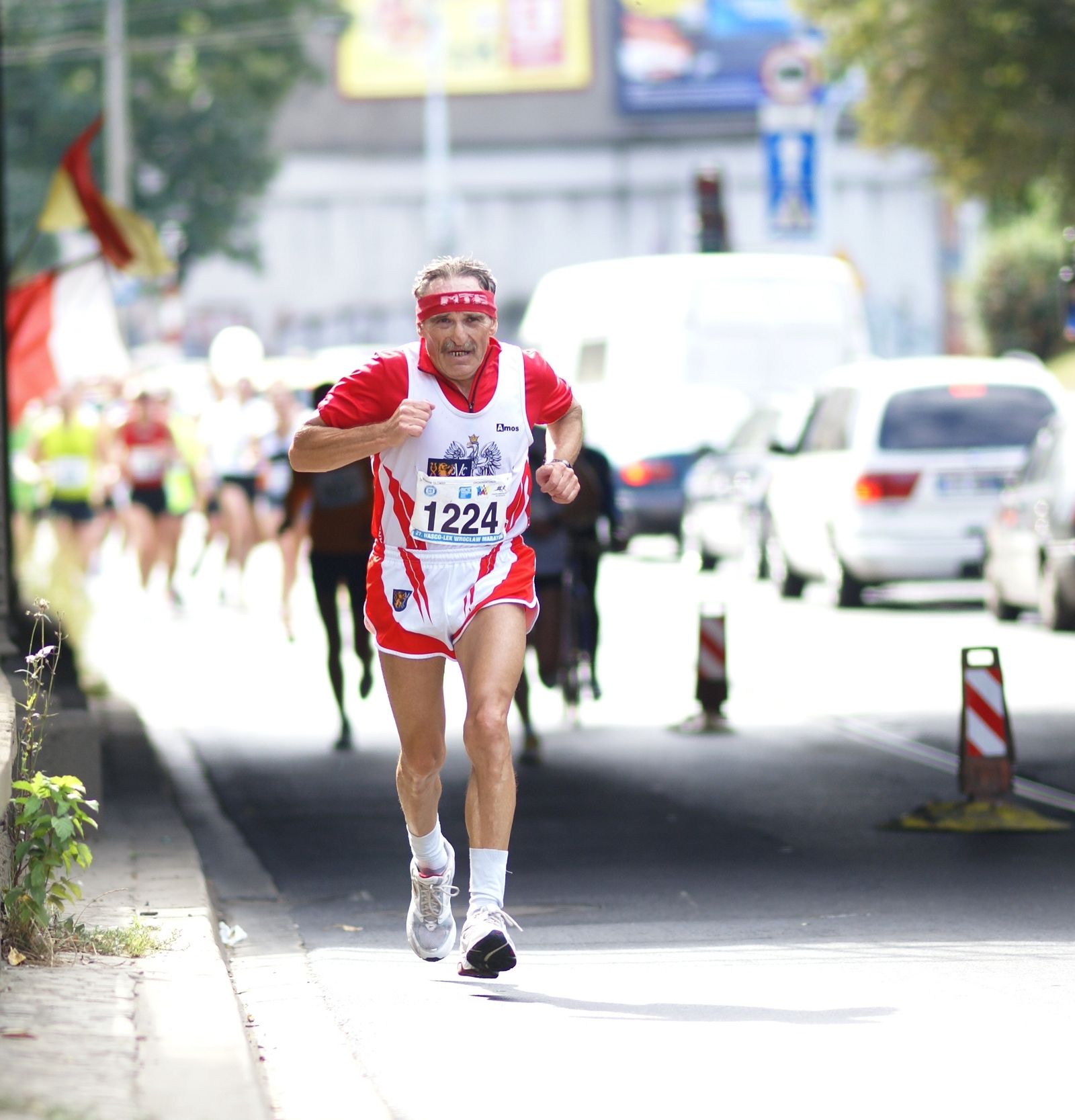
Effort pain (keep going): burning legs, heavy breathing, a general ache on both sides of the body. It rises as you speed up and eases within a minute or two when you back off. It's uncomfortable, but it's information, not damage.
Warning pain (slow down or stop): sharp or stabbing pain in one spot, pain on one side only, pain in a joint or pinpoint pain on a bone, or anything that gets worse at a steady pace or forces you to limp. Running on these can turn a bad day into a stress fracture or torn tendon. Walk, then find the medical tent.
Emergency signs (stop now): chest pain or pressure, dizziness, confusion, fainting, or no longer sweating in the heat. These are medical emergencies. Alert a marshal or medic immediately.
If a niggle that appeared in a race lingers for more than a few days afterwards, see a physio or sports doctor before you train hard again.
Rule 2: Train your pain tolerance on purpose
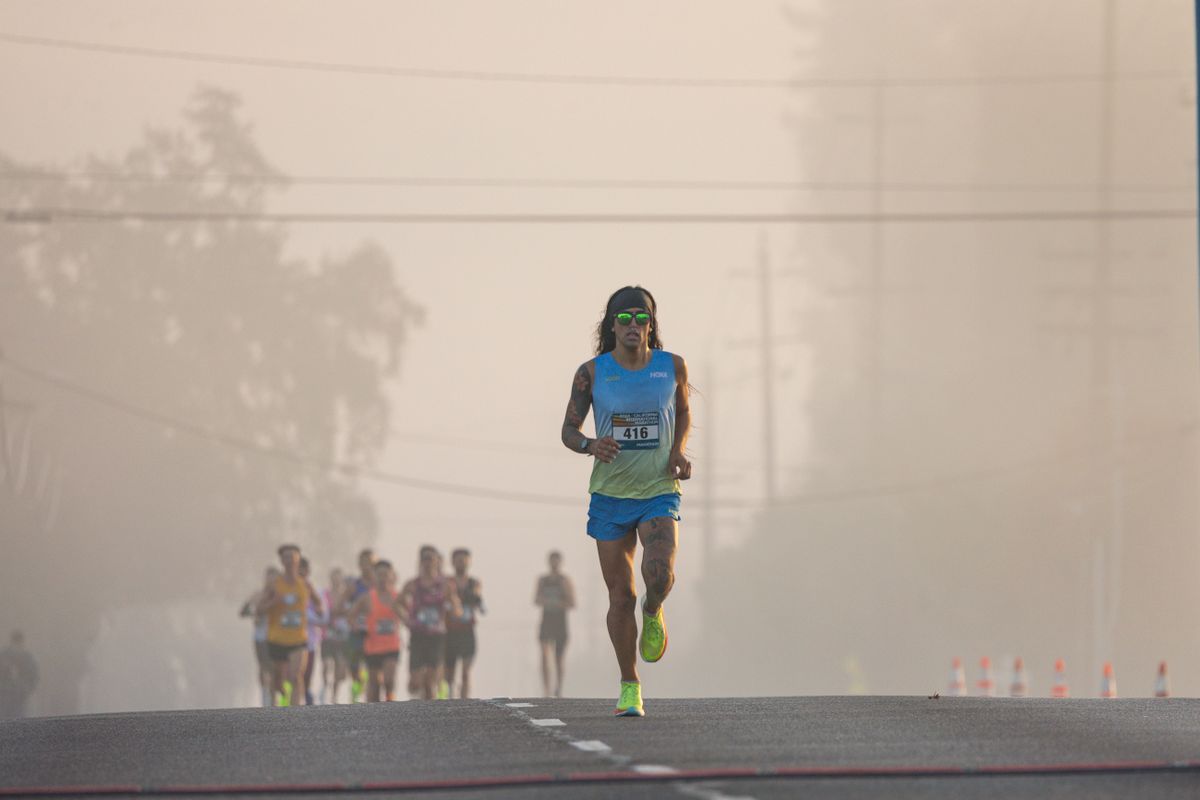
Tolerance for discomfort isn't fixed at birth. In a 2017 randomized trial, Thomas O'Leary and colleagues compared six weeks of high-intensity intervals (6 to 8 x 5 minutes hard) with volume-matched steady training. Both groups gained similar aerobic fitness. But only the interval group improved pain tolerance, by 41%, in a tourniquet test. The steady group didn't change at all.
The interval group also lasted far longer in a hard time-to-exhaustion test, and those who gained the most pain tolerance tended to improve most.
Do this: once a week, run a session that genuinely hurts. Try 5 x 5 minutes at around 10K pace with 2.5 minutes of jogging between, for example 5:00/km (8:03/mile) if you run a 50-minute 10K. Use these sessions to rehearse the coping tools below, so they're automatic on race day.
Rule 3: Pick the right focus at the right time
You've probably heard that you should "distract yourself" from pain. It's not that simple. A 2014 review by Noel Brick, Tadhg MacIntyre and Mark Campbell argued that the old split between "associating" (focusing on your body) and "dissociating" (thinking about anything else) is too crude. They proposed separating internal monitoring (checking breathing, effort, pace), active self-regulation (adjusting form and pace, using self-talk) and distraction.
In practice:
- Early in the race: monitor. Check your pace and breathing every kilometre. This is where you catch the mile 2 mistake.
- In the middle: self-regulate. Relax your shoulders, shorten your stride on hills, take your fuel on schedule.
- When it gets dark: chunk it. Don't think about 8 km to go. Think about reaching the next aid station, the next corner, the next 400 m.
- Distraction works best in long, steady stretches where pace isn't critical. In the hard final third, it can let your pace drift.
Rule 4: Relax your face and script your words
When it hurts, most runners grimace. That may be making it worse.
In a 2018 study by Brick, Megan McElhinney and Richard Metcalfe, 24 trained runners ran 6-minute blocks while smiling, frowning, consciously relaxing, or thinking normally. Smiling lowered the oxygen cost of running by 2.8% compared with frowning and by 2.2% compared with normal focus. Frowning also made the effort feel harder.
Do this: every kilometre or so, run a quick body check. Soften your jaw, drop your shoulders, loosen your hands, and smile, even if it feels ridiculous.
Then add words. Motivational self-talk has controlled evidence behind it. A 2014 study by Anthony Blanchfield and colleagues found that two weeks of self-talk training boosted endurance time by about 18%. Our guide to the self-talk script that changes race times shows how to build yours. Keep it short, positive and practised: "relax and roll," "strong to the next marker."
Rule 5: Don't medicate the pain away
It's tempting to swallow ibuprofen before a long race "just in case." The evidence says don't. In a 2017 randomized, placebo-controlled trial led by Grant Lipman, ultramarathoners took either 400 mg of ibuprofen every 4 hours or a placebo during an 80 km (50 mile) stage. Acute kidney injury occurred in 52% of the ibuprofen group versus 34% on placebo. Roughly one extra case for every 5 to 6 runners who took it.
Painkillers can also mask the warning pain described in Rule 1. If you rely on medication to race, talk to a doctor first.
Caffeine is a different story. Moderate doses of about 3 mg per kg of body weight (around 200 mg for a 68 kg / 150 lb runner), taken roughly an hour before the start, are a well-researched, legal way to lower perceived effort. Test it in training first.
Your race-day pain plan
Write this on your hand, or at least in your head:
- First 3 km (2 miles): goal pace or 5 seconds per km slower. If it feels "too easy," that's correct.
- Middle third: settle in, fuel on schedule, body check every kilometre.
- The dark patch: it's coming, usually around two-thirds distance. Expect it, label it ("this is the hard part, right on time"), chunk the course, use your phrase.
- Final 10%: now you can spend everything. This is where even pacing pays off.
A well-planned taper helps too. Arriving fresh means the same pace hurts less, and our race-week taper plan walks you through it.
For a narrative deep dive into the psychology of suffering, Matt Fitzgerald's How Bad Do You Want It? is excellent further reading.
Find a race to practise on
The pain cave rules only stick when you test them under a race number. Browse half marathons to rehearse your pacing plan, look ahead to marathons when you're ready for the full test, or explore every upcoming race on Runtra.
FAQ
How do you deal with pain during a race?
Start at an even pace so you don't create extra fatigue early. When discomfort builds, break the race into small chunks, relax your face and shoulders, and repeat a short, rehearsed phrase. Stop if pain becomes sharp, one-sided, or changes the way you run.
How do I know if race pain is an injury?
Normal effort pain is widespread, affects both sides, and eases quickly when you slow down. Injury pain tends to be sharp, localized to one spot or side, gets worse at a steady pace, or makes you limp. If you're unsure, walk and get checked at a medical station.
Can you train yourself to tolerate more pain when running?
Yes. In a 2017 randomized trial, six weeks of hard interval training increased pain tolerance by 41%, while steady moderate training didn't change it. Including one genuinely hard session a week, and practising coping strategies during it, builds tolerance over time.
Should I take ibuprofen before a marathon?
It's best avoided. A randomized trial in ultramarathon runners found more acute kidney injury in those taking ibuprofen during the race (52% versus 34%). It can also hide warning signs of injury, so talk to a doctor if you think you need pain relief.
Why does the second half of a race hurt so much more?
Fatigue accumulates, fuel stores drop, and your brain responds by raising your sense of effort. If you started too fast, this happens sooner and more intensely. Even pacing in the first few kilometres is the single best way to make the second half more bearable.