
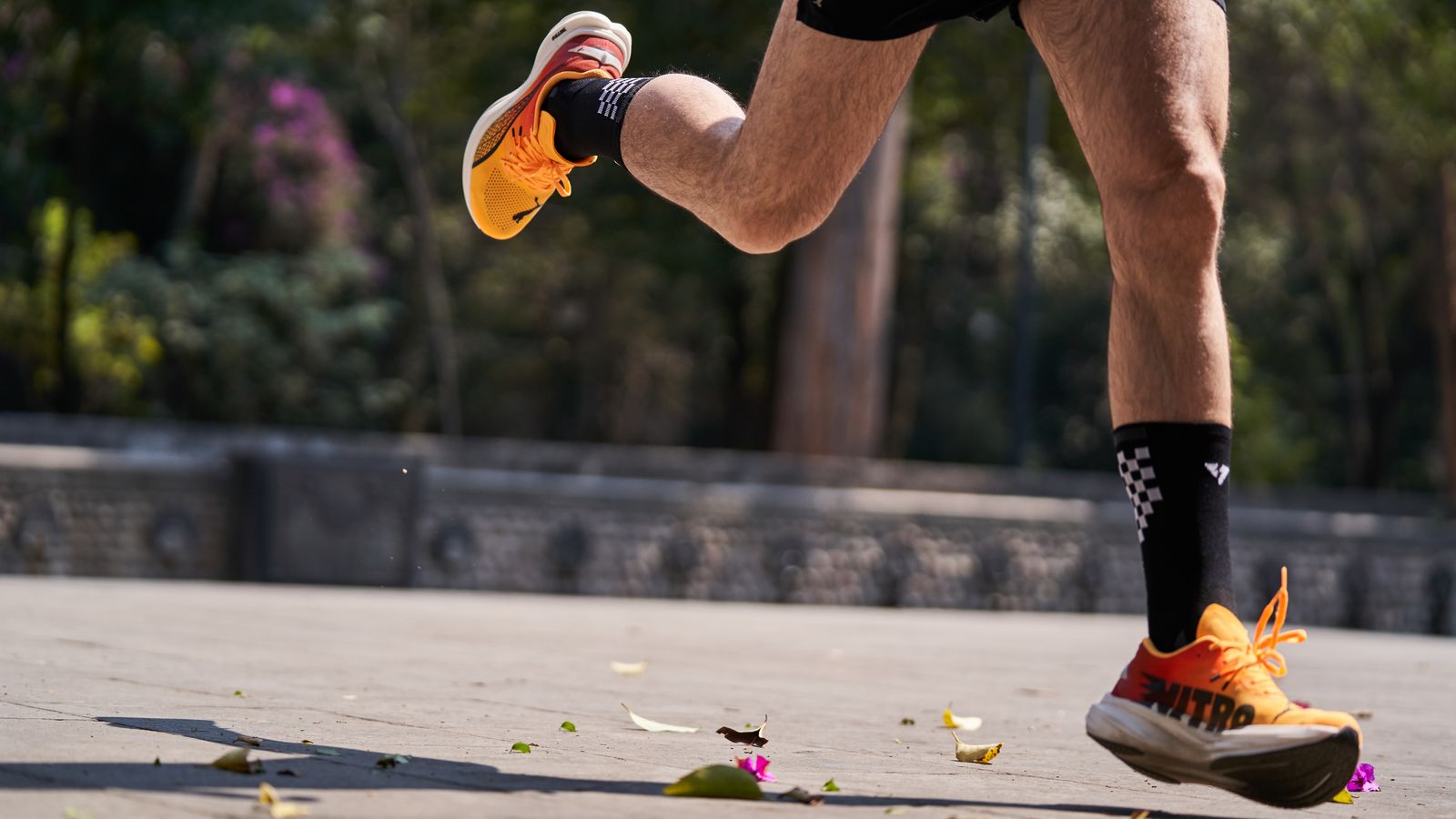
Cadence Cults Are Wrong. Here's What Actually Changes Impact Forces
Is 180 steps per minute the perfect running cadence? No. Here's what the research says actually lowers impact forces, and how to nudge your cadence safely.

Telchatta Kumar
Cadence Cults Are Wrong. Here's What Actually Changes Impact Forces
Listen to this article · English
There is no magic running cadence. The famous 180 steps per minute came from watching Olympic racers, not from injury research, and healthy cadence varies widely with your height, speed and build. What actually changes impact forces is where your foot lands relative to your body and how long your stride is, and a small 5–10% cadence increase is simply one easy way to shorten that stride.
Key takeaways
- 180 steps per minute is an observation of elite racers at race pace, not a universal target.
- Elite runners in a 100 km world championship averaged 182 spm, but individuals ranged from about 155 to 203 spm.
- Raising your own cadence by 5–10% reduces braking and the load absorbed at the knee and hip.
- Overstriding, not "low cadence" itself, is the main problem worth fixing.
- If you are healthy and pain-free, you may not need to change anything at all.
Where the 180 number came from
The 180 rule traces back to coach Jack Daniels, who counted the step rates of runners at the 1984 Los Angeles Olympics and noticed that almost all of them took around 180 steps per minute or more. It was a useful coaching observation. It was never a prescription.
Look at who was being counted: world-class athletes, racing, at speeds most of us hold for about 30 seconds. Cadence rises naturally as you run faster, so measuring Olympians at race pace and applying the number to a recreational runner jogging at 6:30/km (10:28/mile) mixes apples and oranges.
Over the following decades, the observation hardened into a rule. Running apps added cadence alerts, form gurus built methods around it, and many runners began forcing a metronome beat that felt nothing like their natural rhythm.
What the elite data really shows
The best real-world test came from biomechanist and elite ultrarunner Geoffrey Burns. In a 2019 study in the Journal of Applied Physiology, Burns, Zendler and Zernicke used wrist-worn watches to record the step rate of 20 top finishers at the 2016 100 km World Championship.
The average was 182 steps per minute, which sounds like a win for the cadence cult. But the range ran from roughly 155 to 203 spm among runners who were all world-class. Cadence rose with speed and tended to be lower in taller runners, yet height, speed and the other measured factors explained only part of the variation.
In other words, two equally good runners of the same height can sit 30 or 40 steps per minute apart. Your "right" cadence is individual, and it changes every time you change pace.
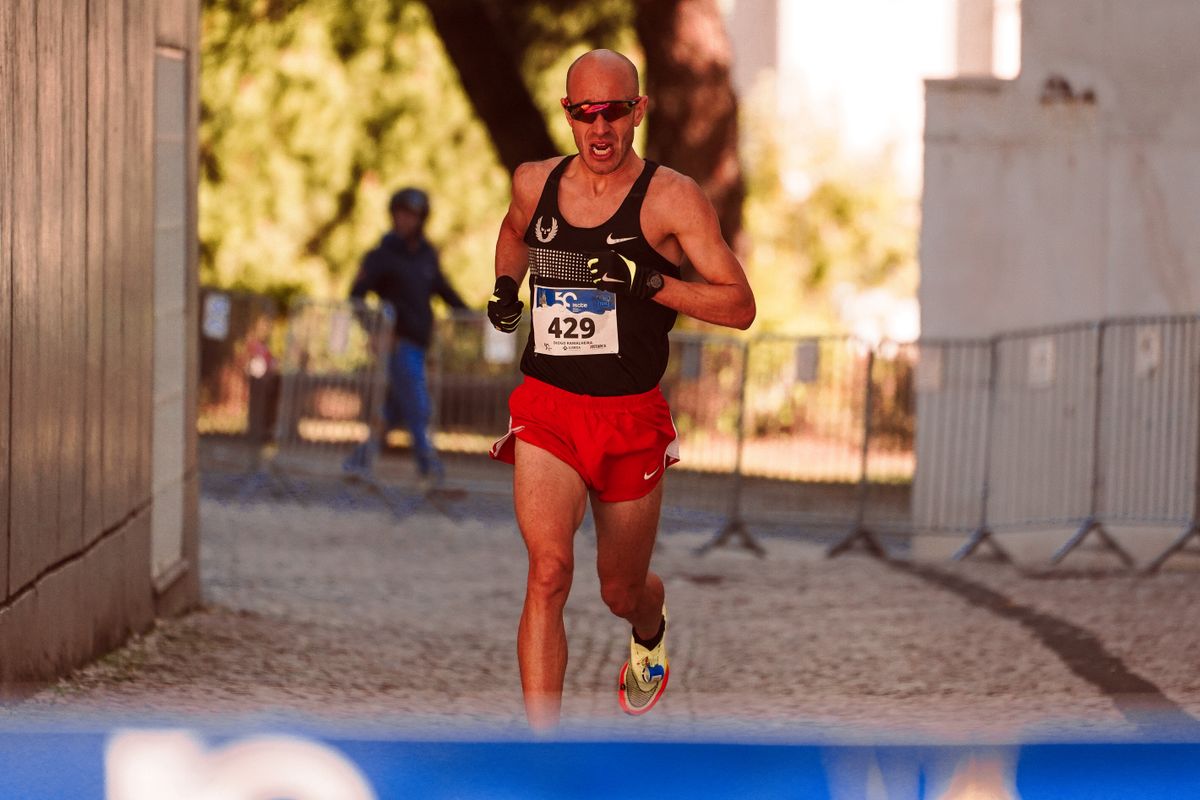
What actually changes impact forces
When your foot hits the ground, the ground pushes back. In running, the peak vertical force is typically around 2–3 times body weight. That force is not automatically harmful (bones and tendons adapt to load), but how fast it rises and where it is absorbed matters.
Several things move those numbers more than any cadence target:
- Where your foot lands. A foot that lands well ahead of your hips, with a nearly straight knee, acts like a brake. Each step slows you down and sends a sharper force up the leg.
- Stride length. Longer strides at the same speed mean more vertical bounce and more energy absorbed per step at the knee.
- Speed. Faster running raises forces, which is one reason hard sessions need recovery.
- Volume and progression. How much and how quickly you add mileage matters more over a season than any single step.
- How "loud" you land. A heavy, slapping landing usually signals a high loading rate.
Cadence matters only because it is linked to stride length. At a fixed pace, more steps per minute means each step must be shorter, which tends to pull the foot back under your body.
The study that made cadence respectable
In 2011, Bryan Heiderscheit and colleagues had 45 recreational runners run on a treadmill at a fixed speed while changing their step rate up and down by 5% and 10%. When runners increased step rate by 5%, the knee absorbed about 20% less energy. At +10%, the reduction at the knee was about 34%, and loading at the hip dropped too. Braking impulse and vertical bounce also fell.
Notice the key detail: the increase was relative to each runner's own preferred cadence. A runner at 160 spm moving to 168 got the benefit. Nobody needed to hit 180. A 2014 follow-up from the same research group (Lenhart and colleagues) found that a higher step rate also reduced forces at the patellofemoral (kneecap) joint, a common pain site in runners.
Impact forces and injury: the honest version
It is tempting to say "lower impact equals fewer injuries," but the evidence is messier. Prospective work from Irene Davis's lab has linked higher vertical loading rates to injury in female runners, yet systematic reviews pooling many studies find the link between impact forces and injury is inconsistent overall.
The fair reading: reducing braking and knee load is a sensible tool for runners with certain knee or shin problems, and a reasonable option for heavy overstriders. It is not a guaranteed injury shield, and it is not a reason to rebuild a pain-free stride. Hip and glute strength play a big role too; see why most running injuries start in your hips.
Who should change cadence (and who shouldn't)
Consider a cadence nudge if:
- You have recurring kneecap pain, or a physio has flagged overstriding.
- Video shows your heel landing far in front of your hips with a straight knee.
- You are returning from a shin or knee injury and your clinician suggests gait retraining.
Probably leave it alone if:
- You run pain-free and have done so for months.
- Your cadence only looks "low" at easy pace but rises naturally when you speed up.
- You are already near the upper end of the elite range.
If you have pain that lasts more than a week, worsens during runs, or changes how you walk, see a physiotherapist or sports doctor before experimenting with form.
How to raise your cadence safely
Do this as a small, gradual change, not a makeover.
Step 1: Measure your baseline
Run 10 minutes at your normal easy pace on flat ground, for example 6:00/km (9:39/mile). Most GPS watches show average cadence; otherwise count right-foot steps for 30 seconds and multiply by 4.
Step 2: Add 5%
Multiply your baseline by 1.05. If you run 160 spm, your target is 168. Set a free metronome app to that beat or use a playlist at that BPM. Keep your pace the same; the goal is shorter steps, not running faster.
Step 3: Use it in short blocks
- Weeks 1–2: 3 × 3 minutes at the new cadence within an easy run, with normal running in between.
- Weeks 3–4: 3 × 6 minutes, or the final 10 minutes of each easy run.
- Weeks 5–6: Try whole easy runs. If it feels natural, keep it. If not, stay at 5% or go back.
Expect slight calf soreness for the first week; your calves and feet take on a little more work. Pair the change with two short strength sessions a week, such as this 15-minute strength routine for runners.
Step 4: Re-check, don't chase
After six weeks, film yourself from the side. You are looking for a foot landing closer to under your hips and a slightly bent knee at contact. That is the real goal; the number on your watch is just the lever.
Find your next race on Runtra
Shorter, lighter steps pay off most when you race. Browse upcoming races worldwide, pick a fast 10K to test your new stride, or search half marathons for a longer goal.
FAQ
Is 180 steps per minute the ideal running cadence?
No. The figure comes from Jack Daniels counting Olympic runners at race pace in 1984. Elite ultrarunners in a 2019 study ranged from about 155 to 203 steps per minute, so a healthy cadence depends on your height, speed and build.
What is a good cadence for beginners?
Many recreational runners sit around 150–170 steps per minute at easy pace, and that can be perfectly fine. Rather than aiming for a fixed number, compare yourself with yourself: if you overstride or have knee pain, try raising your own cadence by about 5%.
Does increasing cadence reduce injuries?
Raising cadence by 5–10% reduces braking and the energy absorbed at the knee and hip in lab studies. That can help runners with certain knee problems, but research has not shown that it prevents injuries in everyone, so treat it as a targeted tool rather than a cure-all.
How long does it take to change running cadence?
Most runners adapt to a 5% increase within four to six weeks of practising in short blocks during easy runs. Change by small steps and expect mild calf soreness at first. If pain persists, stop and get assessed by a physiotherapist.
Should my cadence be the same at every pace?
No. Cadence naturally rises as you run faster; the 2019 elite study found it climbed with speed throughout the race. It is normal for your easy-pace cadence to be 10–20 steps per minute lower than your race-pace cadence.