
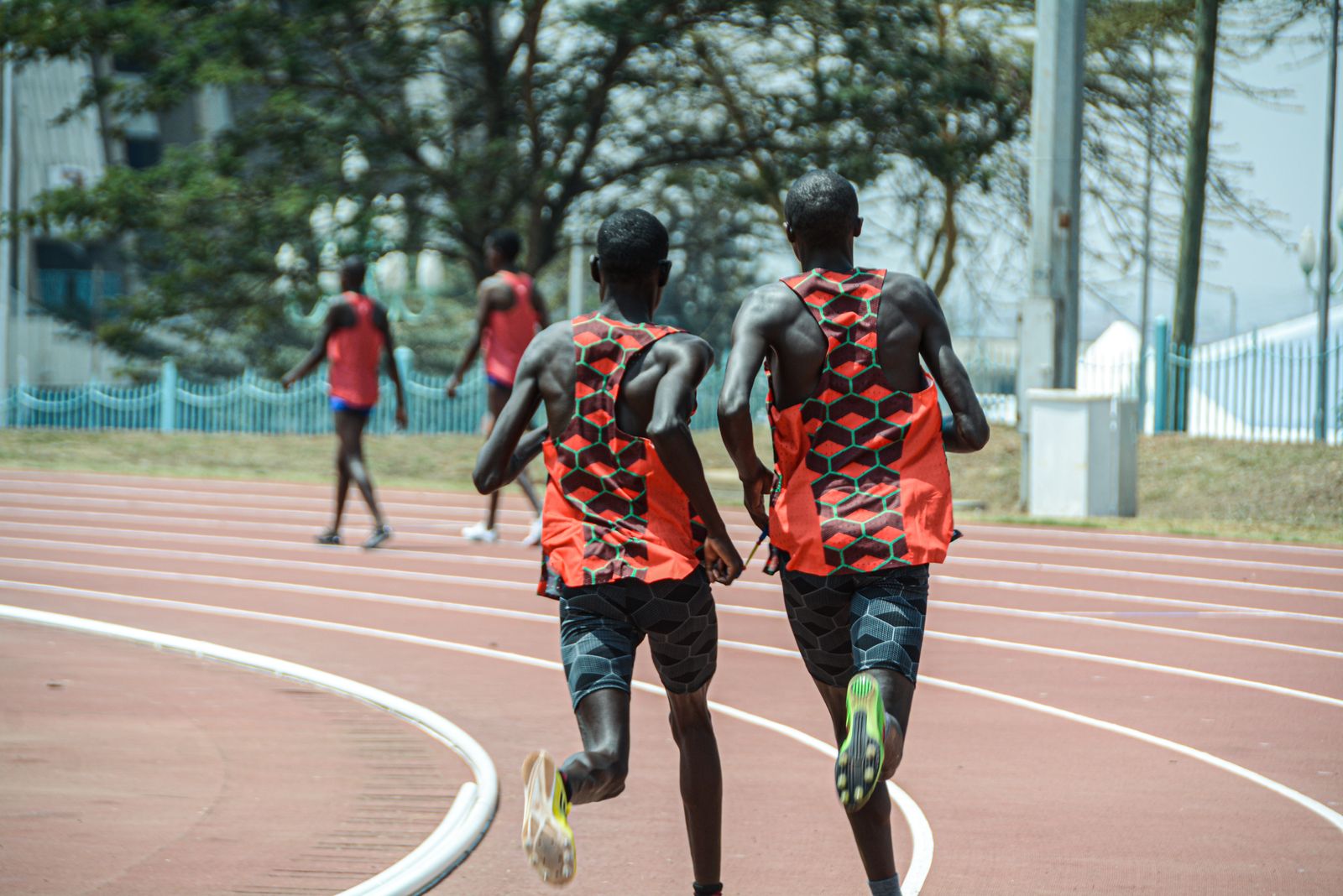
Why Kenya Keeps Producing the World's Fastest Runners
Why are Kenyan runners so fast? Not one magic gene, but altitude, childhood activity, running economy, culture and incentive. What the science shows.

Telchatta Kumar
Why Kenya Keeps Producing the World's Fastest Runners
Listen to this article · English
Kenyan runners are so fast because several advantages stack on top of each other: being born and raised at altitude, an active childhood, slender lower legs that make running economical, a training culture built on volume and patience, and enormous economic incentive. Research has not found a single "Kenyan running gene." Kenya's dominance is a system, not a secret, and most of that system is environment and culture you can partly copy.
Key takeaways
- Elite Kenyan runners come overwhelmingly from one region and one ethnic group: in a 2006 study, 81% of international-level athletes came from the Rift Valley and 76% were Kalenjin.
- Their edge is less about maximal oxygen uptake (VO2 max) and more about running economy, meaning how little energy they use at a given speed.
- Altitude, a high-carbohydrate diet and running to school all help, but none explains the story alone.
- The training culture is the part you can steal: very easy easy days, group running, soft surfaces, hills, and years of consistency.
The numbers behind the dominance
Kenyan men and women have held or broken world records at nearly every distance from 1500 m to the marathon. Eliud Kipchoge ran 2:01:09 in Berlin in 2022, and the late Kelvin Kiptum lowered the marathon world record to 2:00:35 in Chicago in 2023. On the women's side, Faith Kipyegon has repeatedly broken the 1500 m world record.
What makes it remarkable isn't just the stars. It's the depth. Kenyan runners routinely fill the top ten of major marathons around the world.
And the talent pool is narrow. When Vincent Onywera, Yannis Pitsiladis and colleagues surveyed 404 elite Kenyan runners for a 2006 study in the Journal of Sports Sciences, they found:
- 81% of international-level athletes came from the Rift Valley province, compared with 20% of a control group.
- 76% were Kalenjin, compared with 8% of controls.
- 44% came from a single Kalenjin sub-group, the Nandi.
So the question is less "why Kenya?" and more "why the Rift Valley highlands?"
Advantage 1: born and raised high
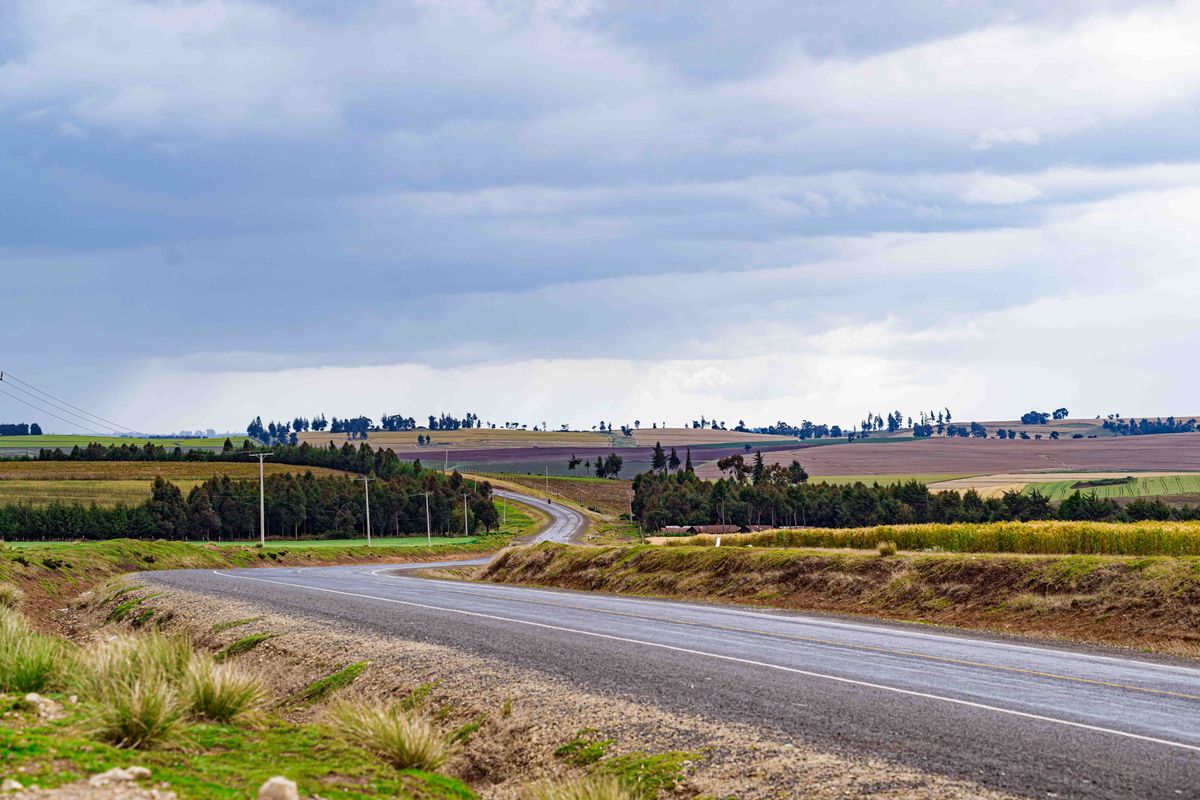
Much of the Kenyan running heartland sits above 2,000 m (6,560 ft). Iten, the training town known as the "Home of Champions," sits at roughly 2,400 m (7,900 ft).
Living at altitude gradually increases the body's red blood cell mass, which raises oxygen-carrying capacity. Growing up there means years of adaptation, not a three-week camp.
But altitude isn't the whole answer. Other high-altitude populations, in the Andes and on the Tibetan plateau, have not produced the same wave of distance champions. Altitude seems to multiply an advantage rather than create one.
Advantage 2: economy, not just engine
In the 1990s, the Swedish physiologist Bengt Saltin led landmark studies comparing Kenyan and Scandinavian runners. A 1995 paper from his group in the Scandinavian Journal of Medicine & Science in Sports reported three key findings:
- The best Scandinavians had a similar VO2 max to the Kenyan runners. The engine size was roughly the same.
- The Kenyans used less oxygen at the same running speed. In other words, they were more economical.
- Kenyans accumulated less lactate and ammonia in the blood at high intensities.
Why the better economy? Saltin's group pointed to anatomy. A 2004 report in Science described their finding that Kenyan runners had, on average, about 400 grams less mass in each lower leg than Danish runners. The further weight sits from your hips, the more energy it takes to swing it. Saltin's team calculated that adding just 50 grams at the ankle raises oxygen consumption by about 1%.
Body proportions like long, slim lower legs are partly inherited, which is where genetics plausibly plays a role. But that is very different from a single "fast gene."
Advantage 3: an active childhood
Onywera's 2006 survey found that 81% of international-level Kenyan runners had run to school each day, compared with 22% of controls, and they covered greater distances.
That fits Saltin's data: in his study, Kenyan boys who regularly walked or ran but didn't train for competition had a VO2 max above 62 ml/kg/min, compared with about 47 ml/kg/min in sedentary boys of the same age.
The picture isn't settled, though. Saltin's group later reported that Kenyan children weren't necessarily more active than Danish children overall. The fairest reading is that years of daily, low-intensity movement at altitude builds a big aerobic base early, and that base matters most when combined with everything else.
Advantage 4: what's on the plate
Kenyan runners eat a simple, high-carbohydrate diet: ugali (a stiff maize porridge), rice, beans, greens, bread and sweet milky tea. A 2004 study of elite Kenyan runners by Onywera and colleagues found that about 76.5% of their energy came from carbohydrate, around 10.4 g per kg of body weight per day, with only about 13% from fat.
That is close to what sports nutrition guidelines recommend for heavy endurance training. It's not exotic. It's just consistent fuel for high mileage.
Advantage 5: culture, coaching and incentive
The softer factors may matter most.
- Role models. Children in the Rift Valley grow up knowing neighbours who became world champions. Running is a visible, realistic career.
- Economic incentive. Prize money and appearance fees from one big race can transform a family's finances. Thousands of young athletes train with total commitment for that chance.
- Coaching and camps. Coaches such as Brother Colm O'Connell, who coached at St Patrick's High School in Iten for decades, helped build a pipeline of champions. Training camps let athletes run, eat, rest and repeat.
- Group training. Large packs at 6 a.m. make hard work feel normal and easy days social.
An honest caveat
Kenya has also faced a serious doping problem. The Athletics Integrity Unit has sanctioned many Kenyan athletes in recent years, and World Athletics places Kenya in its highest-risk category for anti-doping oversight. That doesn't erase the genuine advantages above, but any honest explanation has to acknowledge it.
What you can steal from Kenyan training
You can't choose your birthplace or your calf mass. You can copy the habits.
Make easy days truly easy
Kenyan runners are famous for starting easy runs remarkably slowly. If you're not sure your easy pace is easy enough, the talk test is a simple check. For most recreational runners, easy running will feel like a conversational 6:00-6:45/km (9:39-10:52/mile) or slower. This is the core of the 80/20 approach.
Run on soft, hilly ground
Dirt roads and rolling hills spread impact and build strength. Aim for at least one or two runs a week on trails or grass.
Find a group
Even one weekly group run adds accountability and makes quality sessions feel less lonely.
Rest like it's training
Many Kenyan athletes nap in the afternoon and do little besides run, eat and sleep. You probably can't, but protecting 7-9 hours of sleep is within reach.
Sample Kenyan-inspired week (intermediate runner)
- Monday: 45 minutes easy.
- Tuesday: fartlek, 20 × 1 minute fast, 1 minute easy jog.
- Wednesday: 50 minutes easy on soft ground.
- Thursday: 10 × 60-second hill repeats, jog down to recover.
- Friday: rest or 30 minutes very easy.
- Saturday: 90-minute long run, starting very slow and finishing at a steady effort.
- Sunday: rest.
For a broader look at what traditional running cultures share, see what the Tarahumara got right about endurance.
Race where the legends run
Want to see Kenyan running up close? Browse races in Kenya, explore fast 10K races, or check our best marathons of 2026 to line up against the world's best.
FAQ
Why are Kenyan runners so good at long distance?
It's a combination of factors: growing up at high altitude, an active childhood, slim lower legs that improve running economy, a high-carbohydrate diet, a strong group-training culture and big economic incentives. No single factor explains it. Research points to a system of advantages rather than one secret.
Is there a Kenyan running gene?
Researchers have not found a single gene that explains Kenyan success. Studies of candidate genes, including work by Yannis Pitsiladis and colleagues, have not shown a clear "running gene." Inherited body shape, such as long, slender lower legs, likely contributes, but environment and culture play huge roles.
Does living at altitude make you a faster runner?
Living at altitude gradually increases red blood cell mass, which can improve oxygen delivery to muscles. It helps, but it isn't enough on its own: other high-altitude populations haven't produced as many distance champions. Altitude works best combined with years of consistent training.
Which tribe do most Kenyan champions come from?
Most come from the Kalenjin, a group of related communities in the Rift Valley highlands. In a 2006 study, 76% of international-level Kenyan runners were Kalenjin, even though the group made up only 8% of the study's control sample. The Nandi sub-group alone accounted for 44%.
How can I train like a Kenyan runner?
Keep easy runs truly slow, run on soft and hilly ground, train with a group when you can, and prioritise sleep and simple high-carbohydrate meals. Most of all, be consistent for years rather than weeks. Kenyan elites usually build their base over a decade before they peak.